
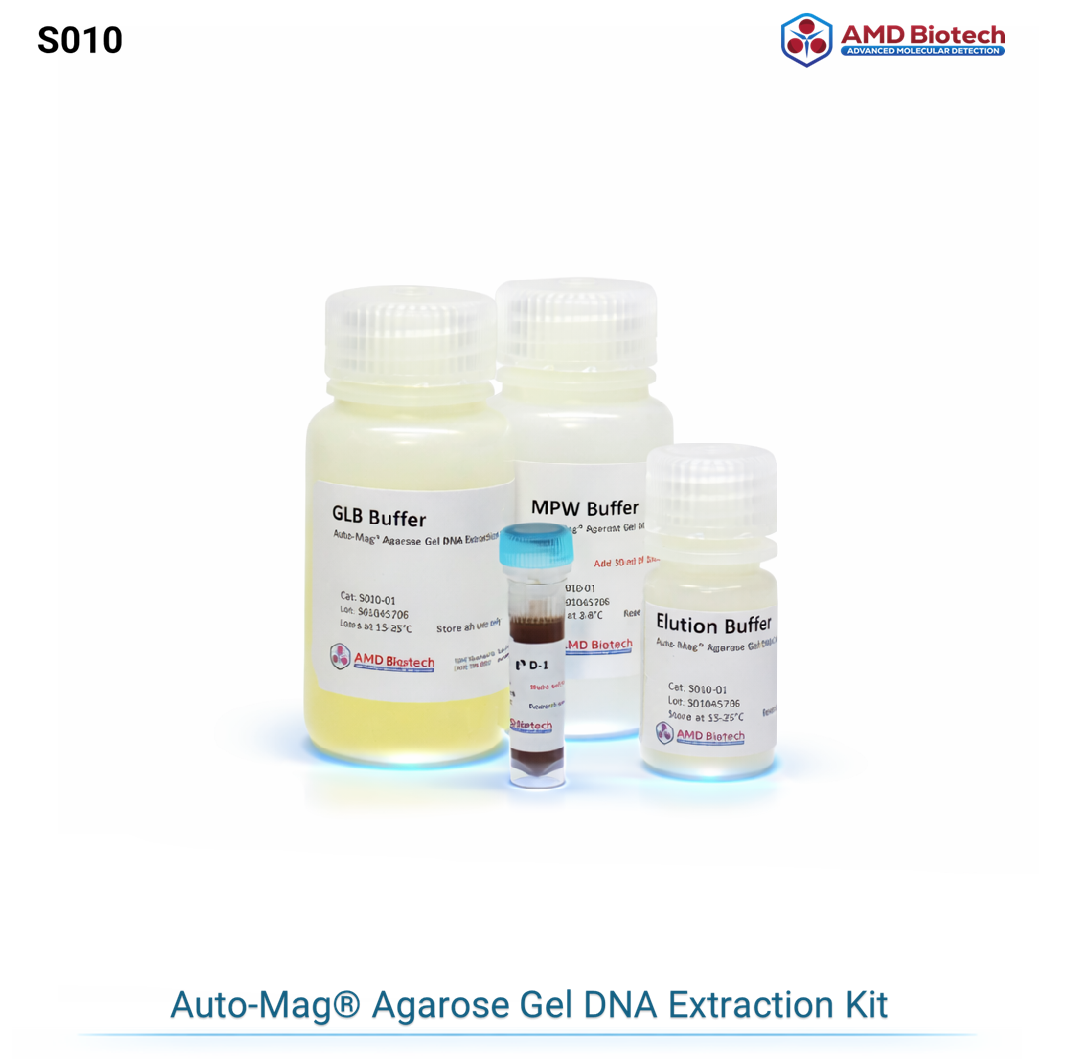
Auto-Mag® Agarose Gel DNA Extraction Kit
Product Information
Auto-Mag® Agarose Gel DNA Extraction Kit provides a simple and efficient method for isolating small and large DNA fragments from standard or low-melting-point agarose gels. The optimized workflow combines rapid gel dissolution with magnetic bead-based DNA capture, enabling efficient DNA recovery while removing agarose, salts, staining-related components, and other contaminants. Following excision, the gel slice is dissolved using the supplied Gel Dissolving Buffer. DNA is then captured onto magnetic beads, washed, and eluted using the supplied Elution Buffer. The kit purifies DNA fragments ranging from 50 bp to 20 kb, with recovery typically up to 90%. Purified DNA is suitable for ligation, PCR, sequencing, restriction enzyme digestion, and DNA labeling.
The streamlined magnetic bead-based format supports both routine and higher-throughput workflows. The kit provides a magnetic separation procedure using 1.5 mL microcentrifuge tubes and an alternative centrifugation-based procedure that does not require a magnetic separation device, providing flexibility for different laboratory settings.
Features
- Rapid Gel Dissolution
Optimized solubilization conditions efficiently dissolve excised agarose gel slices and prepare DNA for magnetic bead capture - Efficient DNA Recovery
Optimized magnetic bead chemistry enables reliable capture and recovery of DNA fragments from dissolved agarose gel samples and recovery of DNA fragments is up to 95% - Effective Contaminant Removal
Removes agarose, salts, staining-related components, and other contaminants that may interfere with downstream enzymatic reactions. - Manual or Automated Processing
Magnetic bead purification provides flexibility for both routine manual processing and adaptable automated workflowsl - Downstream Application Ready
Eluted DNA is suitable for ligation, sequencing, labeling, PCR, and other applications
Product Contents
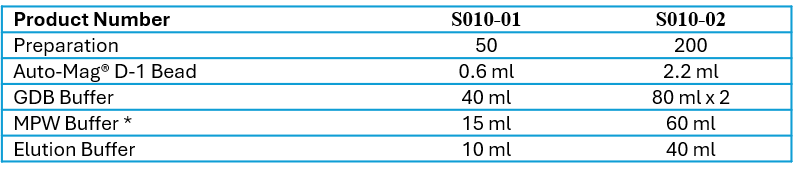
The Auto-Mag® Agarose Gel DNA Extraction Kit contains the reagents required for agarose gel dissolution, DNA capture, washing, and elution.
Gel DNA Extraction Workflow
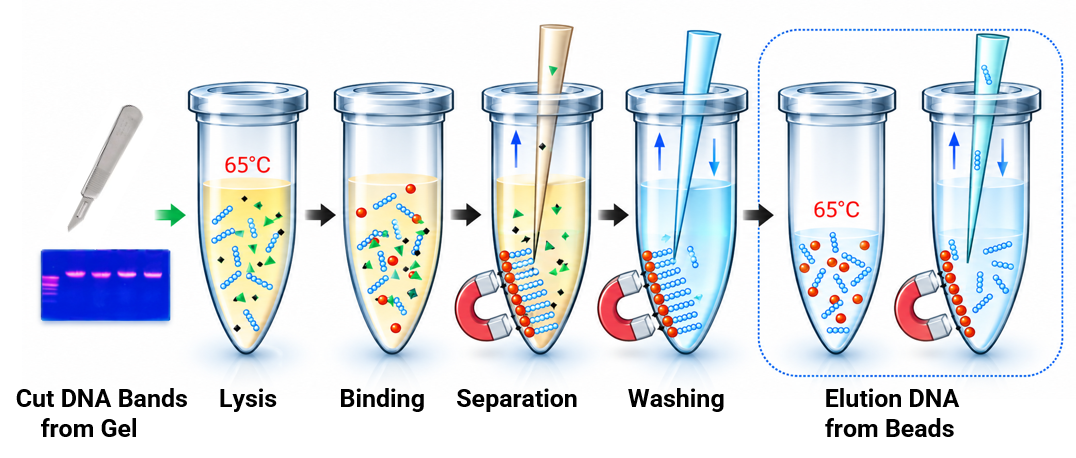
- Use a sterile scalpel or razor blade to excise the desired DNA band from the gel.
- Add an appropriate volume of gel-dissolving buffer
- Add beads to bind nucleic acids.
- Separate the beads from contaminants
- Wash magnetic to remove contaminants.
- Elute DNA from magnetic beads.
Specifications
- Purification method:
- Magnetic bead-based technology
- Sample sources:
- Agarose Gel
- Starting amount:
- Up to 400mg
- Purity:
- Typical Abs 260/280 ≥1.7
- Elution volume:
- >30μl
- Process method:
- Manual or automation
- Downstream application:
- Ligation, PCR, sequencing, restriction digestion, qPCR, PCR
- Shipping/Shelf life:
- Shipping at ambient temperature/Stable for 12 months after the date of shipment.