
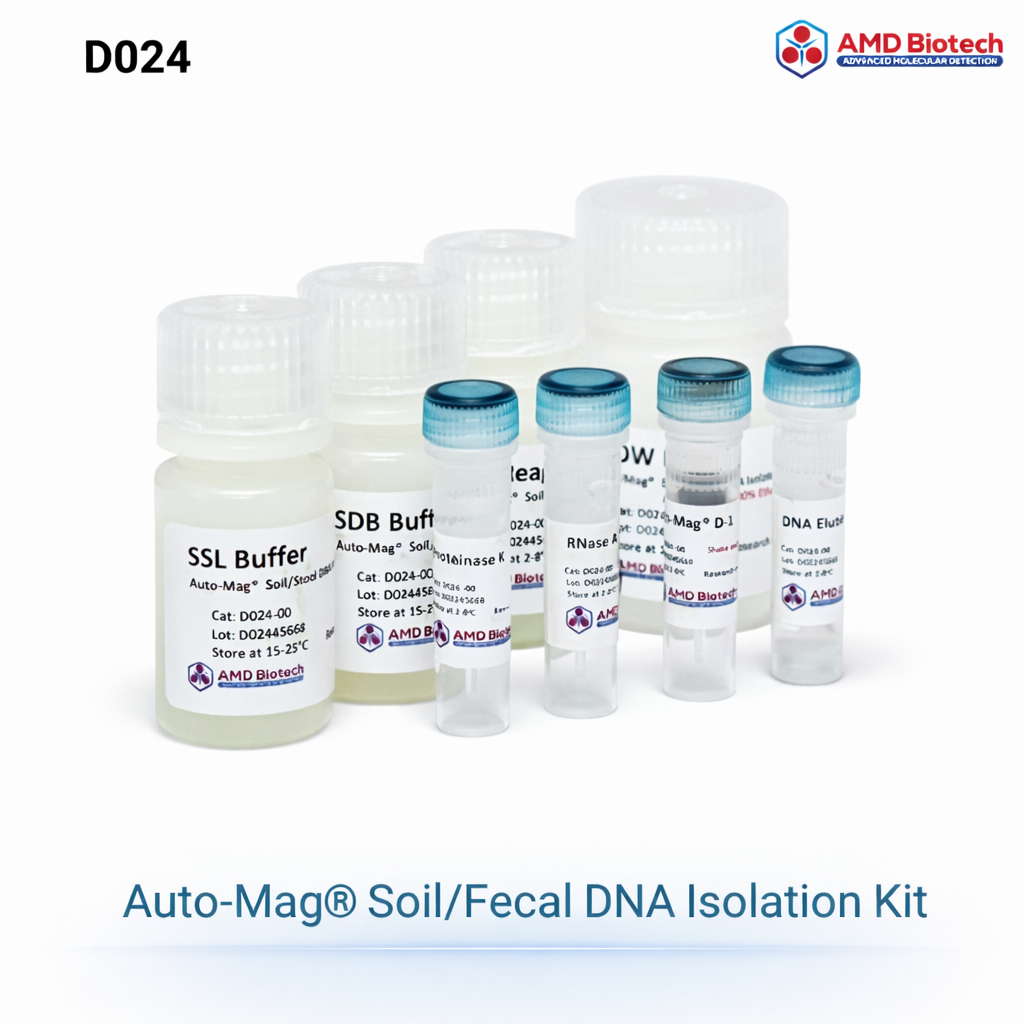
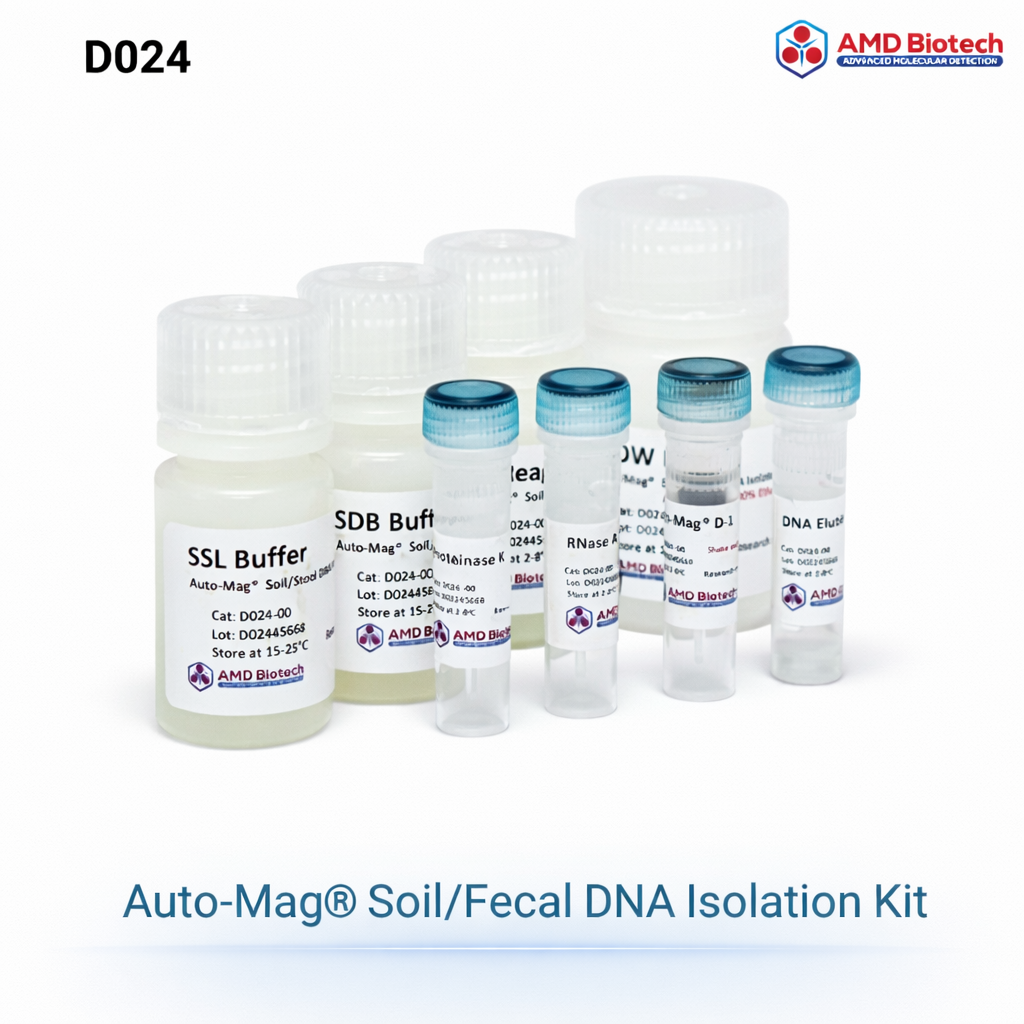
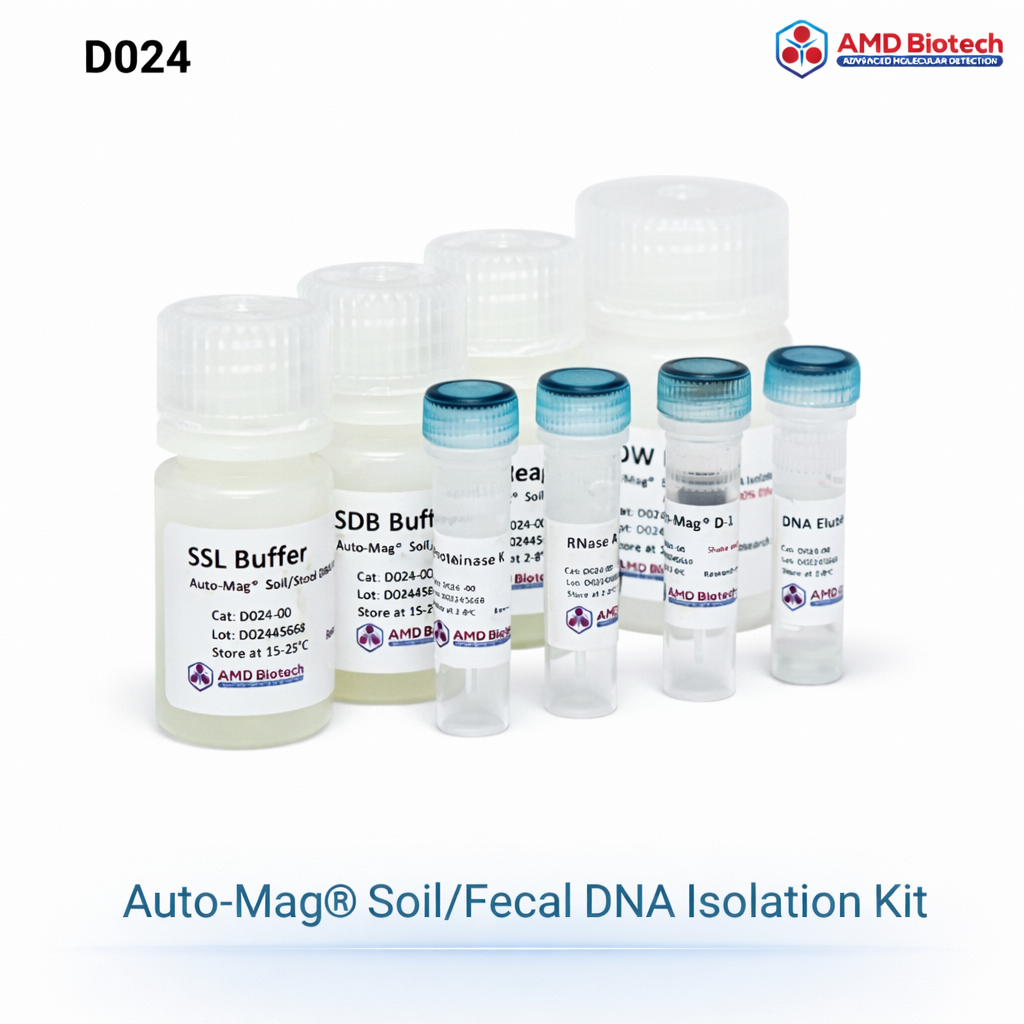
Auto-Mag® Soil/Fecal DNA Isolation Kit
Product Information
Auto-Mag® Soil/Fecal DNA Isolation Kit is designed for the rapid and efficient isolation of inhibitor-free, PCR-quality DNA from microbial populations in soil and fecal samples. Utilizing proprietary IHR Reagents (Inhibitor and Humic Acid Removal), the kit effectively eliminates humic substances and other PCR inhibitors. It is compatible with a wide range of soil types—including clay, silty, sandy, peaty, chalky, and loamy soils—as well as fecal samples from humans, rodents, birds, and livestock. The purified DNA is suitable for a broad range of downstream applications, including PCR, microarray analysis, genotyping, methylation profiling, Sanger sequencing, and next-generation sequencing (NGS).
Auto-Mag® Soil/Fecal DNA Isolation Kit is compatible with both manual and automated workflows. For detailed automation protocols or platform-specific instructions—including for the KingFisher™ system—please contact AMD Biotech Technical Support at support@amdbiotech.com
Features
- Robust Lysis Performance
Combines mechanical homogenization with optimized chemical lysis for effective disruption of microorganisms in challenging sample matrices. - Broad Sample Compatibility
Suitable for soil, fecal material, and other complex biological or environmental samples when used with the appropriate sample-specific protocol. - Effective Inhibitor Removal
The purification workflow is designed to reduce humic substances, proteins, salts, and other contaminants that can interfere with PCR and sequencing. - Efficient Microbial DNA Recovery
Optimized magnetic bead chemistry enables reliable capture and recovery of DNA from complex soil and fecal samples. - Manual or Automated Processing
Supports benchtop magnetic separation as well as automated magnetic bead–based purification workflows.
Product Contents

The Auto-Mag® Soil/Fecal DNA Isolation Kit contains the reagents required for sample disruption, contaminant removal, DNA capture, washing, and elution.
Soil/Fecal DNA Isolation Workflow
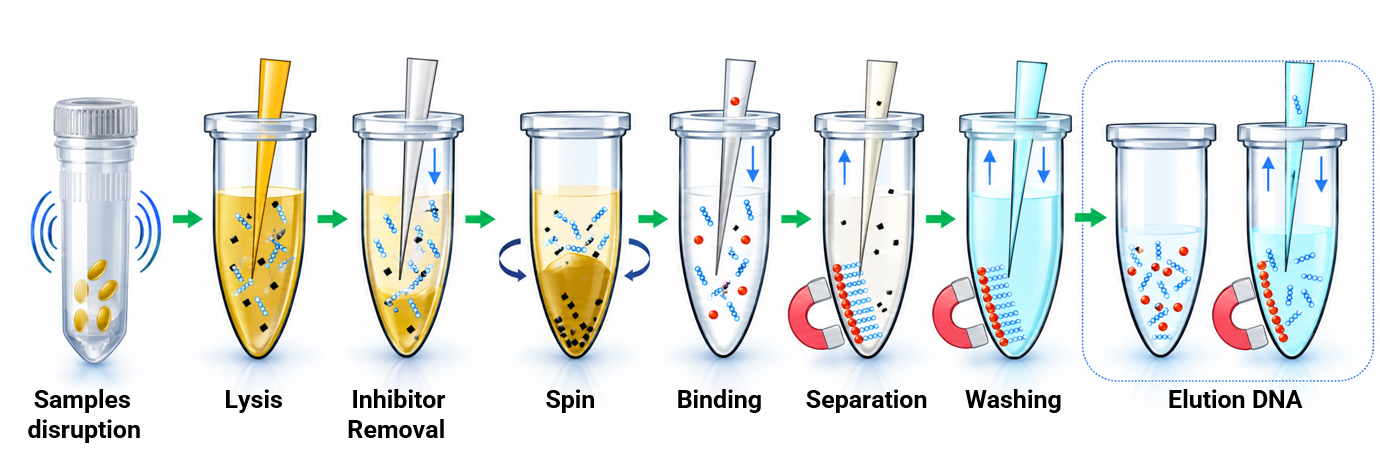
- Disrupt the samples.
- Add lysis buffer and Proteinase K to lyse the samples.
- Add IHR reagent to remove potential inhibitors.
- Centrifuge and transfer the supernatant.
- Add binding buffer and magnetic beads to capture nucleic acids.
- Separate the magnetic beads from contaminants.
- Wash the magnetic beads to remove residual impurities.
- Elute the DNA from the magnetic beads.
Data & References
Specifications
- Isolation method:
- Magnetic bead-based technology
- Sample sources:
- Soil and fecal samples
- Starting Amount:
- Up to 250mg
- Typical Yield:
- Depend upon sample
- Purity:
- Typical Abs 260/280 ≥1.7
- Processing Format:
- Manual or automation
- Downstream Application:
- PCR, microarray analysis, genotyping, methylation profiling, Sanger sequencing, and NGS, etc.
- Shipping/Shelf life:
- Ships at ambient temperature/12 months from date of delivery